Vacuum Truck vs Air-Operated Solids Vacuum Pump: Which Fits Your Sludge Removal Job?

A vacuum truck and a solids vacuum pump can both recover sludge.
That does not mean they perform the same job.
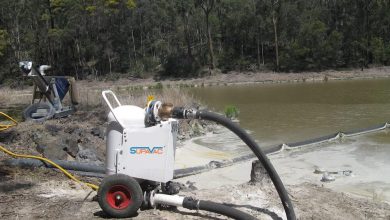
A vacuum truck combines material recovery, onboard storage and road transport. A SupaVac air-operated solids pump is primarily a material recovery and transfer system.
Understanding that difference can prevent an industrial site from using expensive transport equipment for a job that only requires onsite transfer—or, equally, expecting a pump to perform a transport function it cannot provide.
Discuss this application at ADIPEC 2026
Meet Takmeel Global at Hall 15, Stand 15000, ADNEC Abu Dhabi, 2–5 November 2026.
When a Vacuum Truck Makes Sense
A vacuum truck is particularly useful when recovered sludge must:
- leave the site immediately;
- remain contained during transport;
- be carried directly to disposal or treatment;
- be collected from several locations before transportation.
For many waste-management and tank-cleaning contractors, this remains the correct method.
There is no technical reason to replace a well-suited vacuum tanker simply because another technology exists.
When the Requirement Is Only Onsite Transfer
Now consider a different situation.
A refinery needs to move tank-bottom sludge into a nearby waste tank.
A shipyard needs sludge transferred from a vessel to a receiving container.
A processing plant needs a pit cleaned into an onsite treatment system.
A mine needs concentrated sump sludge moved to another part of the facility.
In these cases, the waste does not necessarily need a road-going vehicle at the extraction point.
A dedicated solids-transfer system can therefore be worth evaluating.
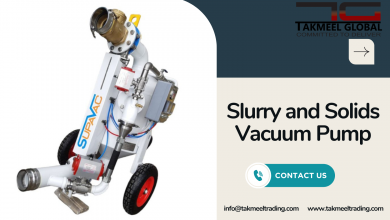
How SupaVac Works
SupaVac pumps operate entirely on compressed air.
The equipment creates a vacuum to recover flowable sludge, slurry and solids-laden material into the pump vessel. Compressed air is then used to discharge the material through the outlet line.
SupaVac officially lists applications including tank cleaning, sump and pit cleaning, hazardous-waste recovery, oil sludge, mining slurry, drilling waste and marine cleaning.
Selected models also provide substantial remote recovery and discharge capability. The SV60-V2, for example, is manufacturer-rated to recover material from up to 50 metres and discharge up to 500 metres under suitable conditions.
Those are manufacturer capability ratings, not guaranteed project distances. Material density, vertical lift, hose layout and compressed-air supply affect actual performance.
Where SupaVac Can Offer a Practical Advantage
A portable solids vacuum pump can be attractive when:
- a truck cannot get close to the sludge source;
- material must be recovered through a long hose;
- sludge contains significant solids;
- repeated clean-out jobs occur at different locations;
- waste already has an onsite receiving point;
- tank, pit or sump access is restricted.
The fact that several SupaVac models have no internal moving components in the pump vessel can also be relevant to high-solids material handling.
Where a Vacuum Truck Is Still Better
Keep the vacuum truck when:
- road transportation is integral to the job;
- the recovered waste needs onboard containment;
- the truck can access the work area easily;
- mobilisation is infrequent;
- the current method already performs reliably.
What About a Conventional Slurry Pump?
A centrifugal or submersible slurry pump can remain the better choice for continuous, pumpable slurry where the equipment can be positioned directly in the material.
SupaVac becomes more interesting where the problem is vacuum recovery of settled, difficult or remote material, rather than ordinary continuous pumping.
Do Not Compare Purchase Price Alone
A proper comparison should include:
- tanker mobilisation;
- cleaning frequency;
- labour;
- project duration;
- plant downtime;
- dilution water;
- additional waste created;
- compressor operation;
- disposal logistics.
Takmeel should not claim that SupaVac will always cost less.
The economic case depends on the application.
Bring Your Current Method to ADIPEC
If you currently use vacuum tankers for sludge recovery, bring the application details to Takmeel Global at ADIPEC 2026.
Useful information includes:
- material;
- solids percentage;
- maximum solids size;
- suction distance;
- vertical lift;
- discharge destination;
- frequency of cleaning;
- compressed-air availability;
- whether the waste must leave site immediately.
We can then discuss whether a SupaVac system is relevant—or whether your current method remains the better option.
ADIPEC 2026 — Hall 15 | Stand 15000
2–5 November 2026 | ADNEC Abu Dhabi
Takmeel Global General Trading LLC
Dubai, UAE
+971 52 692 2575
+971 4 256 4920
info@takmeeltrading.com