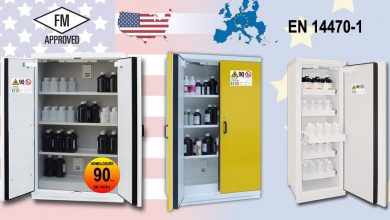
Flammable Chemical Storage Cabinets in the UAE: A Buyer’s Guide for Safer Industrial Storage

Flammable chemicals are used across almost every industrial sector in the UAE. They are found in maintenance workshops, laboratories, oil and gas facilities, manufacturing plants, warehouses, paint shops, fabrication units, marine sites, utilities, research facilities, and service areas. Solvents, paints, thinners, cleaning chemicals, aerosols, adhesives, lubricants, fuels, and process liquids may all create risk when they are not stored correctly.
The issue is not only the chemical itself. The bigger risk comes from poor storage practices: containers left in open areas, incompatible chemicals placed together, leaking cans on ordinary shelves, unlabelled stock, overcrowded storage rooms, and flammable liquids stored close to ignition sources or heat.
A flammable chemical storage cabinet is designed to support safer storage of flammable liquids and related hazardous materials in controlled quantities. For UAE facilities, selecting the right cabinet is an important part of workplace safety, housekeeping, emergency preparedness, and responsible chemical management.
Takmeel Global supplies industrial safety solutions in the UAE, including safety cabinets for hazardous material storage applications. For buyers, the goal should not be to purchase a cabinet only because it looks strong or fits a room. The correct cabinet should be selected according to the material being stored, site risk, compatibility requirements, storage quantity, operating environment, and applicable project or authority requirements.
Why Flammable Chemical Storage Needs Proper Control
Flammable chemicals can release vapours that may ignite under the wrong conditions. Many of these substances are used daily in small containers, drums, cans, spray packs, or bottles, which makes them easy to underestimate. A small quantity may look harmless, but when several containers are stored together without control, the risk increases.
Poor chemical storage can create several workplace hazards:
- Fire risk from flammable vapours
- Chemical exposure during leaks or spills
- Confusion during emergency response
- Contamination from incompatible materials
- Poor inventory control
- Unsafe manual handling
- Slippery floors from spills
- Damage to property and equipment
- Increased risk during audits and inspections
A flammable chemical storage cabinet helps reduce these risks by keeping hazardous materials in a dedicated, labelled, and more controlled storage location. It also supports better workplace discipline because employees know where chemicals should be returned after use.
In many facilities, safety problems begin when chemicals are treated as ordinary stock items. They are placed wherever space is available: under benches, near tools, on open racks, beside electrical panels, or in hot outdoor corners. A proper cabinet gives the facility a defined storage point and reduces random chemical placement.
What Is a Flammable Chemical Storage Cabinet?
A flammable chemical storage cabinet is a specially designed cabinet used for storing flammable liquids and selected hazardous materials. It is different from an ordinary steel cupboard, workshop locker, or general storage rack.
The cabinet is intended to provide safer containment, improve organisation, reduce exposure to external hazards, and support controlled chemical storage. Depending on the cabinet type and specification, it may include features such as labelled doors, shelves, spill containment, locking arrangement, ventilation provisions, grounding points, or fire-resistant construction.
The exact features depend on the model, cabinet category, and manufacturer specification. Buyers should never assume that all safety cabinets offer the same level of protection. A cabinet used for flammable liquids may be different from one used for corrosive chemicals, pesticides, acids, bases, aerosols, gas cylinders, or battery storage.
For this reason, the purchase process should begin with one basic question: what exactly will be stored inside the cabinet?
Common Materials Stored in Flammable Safety Cabinets
Flammable safety cabinets may be used for a wide range of materials, depending on the chemical classification and storage requirement.
Common examples include:
- Paints
- Thinners
- Solvents
- Cleaning liquids
- Degreasers
- Adhesives
- Aerosol products
- Fuel samples
- Small fuel containers
- Flammable laboratory chemicals
- Maintenance chemicals
- Certain industrial process liquids
Before storage, each material should be checked through its Safety Data Sheet. The SDS helps identify hazards, storage instructions, incompatibilities, flash point, handling precautions, and emergency response information.
This is important because not every hazardous chemical belongs in a flammable cabinet. Some chemicals may need a corrosive cabinet, acid cabinet, alkali cabinet, toxic cabinet, oxidiser storage cabinet, or other dedicated storage arrangement. Storing incompatible chemicals together can create serious risk even if the cabinet itself is strong.
EcoSafe Safety Cabinets in the UAE Through Takmeel Global
For buyers who need reliable hazardous material storage solutions in the UAE, EcoSafe is a strong name to consider. EcoSafe manufactures safety storage solutions designed for controlled storage of flammable, corrosive, toxic, hazardous, and other sensitive materials used in industrial, laboratory, institutional, and commercial environments.
Takmeel Global is the official distributor for EcoSafe safety cabinets in the UAE, supporting customers who need dependable storage solutions for chemicals, solvents, paints, thinners, laboratory substances, maintenance liquids, and hazardous materials.
This is important because safety cabinet selection should not be treated as a generic purchase. Industrial buyers need to know the cabinet type, storage capacity, intended chemical category, documentation, application suitability, and site requirements before placing an order. By sourcing EcoSafe safety cabinets through Takmeel Global, UAE customers can discuss their storage requirements with a supplier that understands industrial safety, procurement expectations, and hazardous material handling needs.
EcoSafe safety cabinets can be considered for facilities such as oil and gas sites, laboratories, factories, workshops, warehouses, maintenance stores, chemical handling areas, marine facilities, and industrial plants where safer chemical storage is required.
Where Flammable Chemical Storage Cabinets Are Used in the UAE
Flammable chemical storage cabinets are useful across many UAE industries and facility types.
1. Oil and Gas Facilities
Oil and gas sites use a wide range of maintenance chemicals, lubricants, fuels, solvents, cleaning agents, coatings, and aerosols. A flammable cabinet can help organise smaller hazardous materials used in workshops, maintenance areas, stores, and utility zones.
Typical pain points include:
- Scattered chemical containers
- Solvent storage in open areas
- Poor segregation between products
- Leaking cans and drums
- Audit observations from unsafe storage
- Need for better workshop housekeeping
2. Manufacturing Plants
Manufacturing facilities often use paints, adhesives, degreasers, cleaning solvents, lubricants, inks, and process chemicals. Without proper storage, these materials may end up on production floors, under benches, or near electrical and mechanical equipment.
A suitable cabinet supports safer storage near points of use while helping the facility keep chemical inventory more controlled.
3. Warehouses and Logistics Facilities
Warehouses may handle packed chemicals, aerosols, paints, maintenance liquids, and flammable stock items. Even if the warehouse is not a chemical plant, poor storage of small flammable items can create risk.
Safety cabinets are useful for maintenance stores, packing areas, facility management rooms, and controlled stock zones where smaller quantities of flammable material must be kept safely.
4. Laboratories and Research Facilities
Laboratories require careful storage because chemicals are often used in smaller containers but in higher variety. A lab may store solvents, reagents, acids, bases, oxidisers, and toxic materials. The challenge is not only fire risk but also compatibility.
Flammable cabinets help labs separate flammable solvents from other material groups. However, the laboratory team must still maintain compatibility charts, SDS records, labelling, and internal storage rules.
5. Paint Shops and Coating Areas
Paints, thinners, reducers, hardeners, solvents, and aerosols are common in coating areas. These products should not be left randomly on open shelves or near hot work areas.
A flammable safety cabinet can support controlled storage and better daily housekeeping in paint rooms, fabrication shops, automotive workshops, marine yards, and industrial coating facilities.
6. Marine, Shipyard, and Port Operations
Marine and port facilities use chemicals for cleaning, maintenance, coating, corrosion protection, machinery service, and vessel repair. Many of these materials are flammable or hazardous.
A suitable cabinet can be used in stores, workshops, maintenance zones, and controlled access areas where chemicals need to be secured and organised.
7. Facility Management and Maintenance Teams
Even non-industrial buildings may store hazardous products such as solvents, cleaning agents, fuels, aerosols, adhesives, and maintenance chemicals. Facility teams often overlook these products because they are used in small quantities.
Safety cabinets help FM teams avoid uncontrolled chemical storage in electrical rooms, janitorial stores, maintenance rooms, parking areas, and plant rooms.
Main Pain Points Safety Cabinets Solve
1. Uncontrolled Chemical Storage
One of the most common problems is simple disorder. Chemicals are purchased, used, moved, and stored wherever space is available. A flammable chemical storage cabinet creates a fixed and recognisable storage location.
2. Spill and Leak Containment
Chemical containers may leak due to damage, poor sealing, corrosion, or careless handling. A suitable cabinet can help contain minor leaks and prevent chemicals from spreading across floors or work areas.
3. Incompatible Storage
When chemicals are stored together without checking compatibility, the risk can be serious. A cabinet system supports segregation, but users must still classify chemicals properly and follow SDS guidance.
4. Poor Inventory Control
Many facilities do not know exactly how many flammable products are stored on site. Cabinets help reduce scattered storage and make chemical inventory easier to monitor.
5. Unsafe Access
Chemicals should not be accessible to everyone in the workplace. Lockable cabinets help control access and reduce misuse or accidental handling.
6. Weak Emergency Preparedness
During a fire, spill, or emergency, responders need to know where hazardous materials are located. Properly labelled cabinets improve visibility and help site teams respond more effectively.
7. Audit and Inspection Issues
Poor storage is commonly noticed during internal audits, client inspections, HSE walks, and third-party reviews. Safety cabinets help show that the facility is taking chemical storage seriously.
Key Features to Check Before Buying
Not every cabinet is suitable for every chemical. Buyers should check the following points before selecting a flammable chemical storage cabinet in the UAE.
1. Cabinet Type
Confirm whether the cabinet is designed for flammable liquids, corrosives, acids, bases, pesticides, aerosols, cylinders, batteries, or general hazardous materials. Using the wrong cabinet type can create risk.
2. Capacity
Cabinet capacity should match the actual quantity of materials being stored. Oversized cabinets may encourage unnecessary chemical accumulation, while undersized cabinets may lead to overflow storage outside the cabinet.
3. Fire Resistance or Fire Rating
Some cabinets are designed to provide defined fire resistance based on tested standards. Buyers should ask for the exact fire rating, test standard, certificate, and manufacturer documentation before relying on any fire-resistance claim.
4. Spill Containment
A good safety cabinet should support containment of minor leaks or spills. Check whether the cabinet has a sump, tray, bunded base, or other containment provision suitable for the stored material.
5. Shelf Design
Shelves should be strong enough for the intended container weight and designed to reduce spill spread. Adjustable shelves can help organise different container sizes.
6. Door Operation
Door design affects daily use and emergency performance. Check whether the cabinet has manual doors, self-closing doors, secure latching, and lockable access according to the application requirement.
7. Ventilation Provisions
Some cabinets include ventilation ports or options. Venting requirements must be reviewed carefully according to site policy, cabinet design, chemical type, and safety guidance. Unplanned ventilation can reduce cabinet performance or create vapour routing risks.
8. Grounding and Bonding
For flammable liquids, static electricity control may be required during dispensing or transfer. If the cabinet will be used for dispensing operations, grounding and bonding requirements should be reviewed by competent site personnel.
9. Chemical Compatibility
Cabinet material and internal coating should be suitable for the stored chemicals. Corrosive chemicals may require a different cabinet from flammable solvents.
10. Labelling and Colour Coding
Clear labels help users identify cabinet purpose quickly. Many facilities use colour-coded cabinets for flammables, corrosives, acids, bases, toxics, or other categories.
11. Documentation
Ask for datasheets, compliance documents, test reports, user instructions, and manufacturer details. Do not rely only on catalogue photos.
12. Location and Installation
The cabinet should be placed in a suitable location away from obvious hazards, blocked exits, heat sources, impact risk, and uncontrolled traffic. Site safety teams should approve the location before installation.
Flammable Cabinet vs Corrosive Cabinet
A flammable cabinet and a corrosive cabinet are not the same. This is an important distinction for buyers.
A flammable cabinet is intended for flammable liquids and materials where fire risk is the main concern. A corrosive cabinet is intended for acids, alkalis, or chemicals that can damage ordinary metal surfaces or react dangerously with incompatible materials.
Common buyer mistakes include:
- Storing acids in a flammable cabinet
- Storing solvents with oxidisers
- Keeping cleaning chemicals beside fuels
- Mixing unknown chemicals in one cabinet
- Storing leaking containers without secondary containment
- Ignoring SDS storage instructions
The correct approach is to classify the chemicals first, then choose the cabinet.
How to Build a Safer Chemical Storage System
A safety cabinet is an important control, but it should be part of a complete chemical storage system.
A practical system includes:
1. Chemical Inventory
List all chemicals stored on site. Include product name, quantity, container size, location, hazard class, and SDS availability.
2. Chemical Segregation
Separate flammables, corrosives, oxidisers, toxics, reactive chemicals, and general chemicals according to compatibility.
3. Correct Cabinet Selection
Choose cabinets based on chemical hazard, quantity, container type, and site use.
4. Labelling
Clearly label each cabinet and keep container labels visible and readable.
5. Access Control
Limit cabinet access to trained and authorised users.
6. Spill Preparedness
Keep appropriate spill kits and absorbents nearby, based on the type of chemicals stored.
7. Housekeeping
Do not allow expired chemicals, leaking containers, waste materials, rags, paper, or unrelated tools to accumulate inside cabinets.
8. Inspection Routine
Check cabinets regularly for leaks, corrosion, damaged shelves, poor labels, expired materials, blocked access, or incompatible storage.
9. Training
Users should understand what can be stored in each cabinet, how to read SDS guidance, and what to do during a spill or emergency.
10. Review and Improvement
Chemical storage should be reviewed whenever a new chemical is introduced, storage quantity changes, or site layout changes.
Common Buyer Mistakes to Avoid
Mistake 1: Buying a General Cabinet for Flammable Chemicals
An ordinary metal cabinet is not a flammable safety cabinet. Buyers should check the cabinet type, intended use, and supporting documentation.
Mistake 2: Selecting Only by Price
Low-cost cabinets may appear attractive, but the real cost of poor storage can be far higher. Fire risk, chemical leaks, inspection failure, and downtime can affect the entire facility.
Mistake 3: Ignoring Compatibility
A cabinet does not make incompatible chemicals safe to store together. Segregation remains essential.
Mistake 4: Overloading the Cabinet
Cabinets should not be filled beyond practical and safe limits. Overloading can damage shelves, block visibility, and create handling risk.
Mistake 5: Poor Placement
A good cabinet placed in the wrong location can still create problems. Avoid placing cabinets where they block emergency routes, sit near heat sources, or are exposed to impact.
Mistake 6: No SDS Review
The Safety Data Sheet gives essential storage and handling guidance. Cabinet selection should always consider SDS information.
Mistake 7: Treating the Cabinet as Waste Storage
Expired chemicals, contaminated rags, waste bottles, and unidentified containers should not be dumped into safety cabinets without control.
Industries That Should Prioritise Safety Cabinets
Flammable chemical storage cabinets are especially relevant for:
- Oil and gas facilities
- Refineries
- Petrochemical plants
- Chemical warehouses
- Manufacturing facilities
- Laboratories
- Universities and research centres
- Marine and shipyard operations
- Paint shops
- Automotive workshops
- MEP and facility management teams
- Utility companies
- Airports and transport facilities
- Waste management companies
- Industrial maintenance contractors
Any facility using flammable liquids or hazardous chemicals should review whether current storage practices are adequate.
Why Choose Takmeel Global for EcoSafe Safety Cabinets in the UAE
Takmeel Global supplies EcoSafe safety cabinets in the UAE for customers who need safer, more organised, and more controlled storage of flammable chemicals, corrosive materials, hazardous substances, laboratory chemicals, and industrial maintenance products.
As the official EcoSafe distributor in the UAE, Takmeel Global helps buyers move beyond generic cabinet selection. The team can support customers in reviewing the type of material being stored, cabinet capacity, application area, storage location, and documentation required for the project or facility.
This is especially useful for HSE teams, procurement departments, facility managers, laboratory users, warehouse supervisors, and industrial maintenance teams who need the right cabinet for the right hazard category.
EcoSafe safety cabinets are relevant for:
- Flammable liquid storage
- Chemical storage
- Corrosive material storage
- Toxic material storage
- Laboratory chemical storage
- Industrial maintenance chemical storage
- Hazardous material storage
- Workshop and warehouse safety storage
For UAE industries, choosing EcoSafe through Takmeel Global gives buyers access to a recognised safety cabinet brand through a local supplier familiar with oil and gas, industrial, marine, laboratory, and engineering procurement requirements.
FAQs About Flammable Chemical Storage Cabinets in UAE
What is a flammable chemical storage cabinet?
A flammable chemical storage cabinet is a dedicated safety cabinet used to store flammable liquids and selected hazardous materials in a more controlled and organised way.
Are safety cabinets different from ordinary steel cupboards?
Yes. A safety cabinet is designed for hazardous material storage and may include features such as labelling, spill containment, secure doors, and fire-resistant construction depending on the model. An ordinary cupboard is not a substitute.
What chemicals can be stored in a flammable cabinet?
Flammable liquids such as solvents, paints, thinners, cleaning chemicals, fuels, and related products may be stored in a flammable cabinet, depending on the chemical classification and SDS guidance.
Can acids and flammable liquids be stored together?
They should not be stored together unless compatibility has been properly reviewed and the SDS allows it. In most facilities, acids, bases, oxidisers, and flammables require separate storage controls.
How do I choose the right safety cabinet in the UAE?
Start by identifying the chemicals, quantities, container sizes, compatibility groups, site location, cabinet capacity, fire-resistance requirement, spill containment needs, and documentation required by the project or authority.
Do flammable cabinets need ventilation?
Ventilation requirements depend on the cabinet design, chemical type, site policy, and applicable safety guidance. Venting should not be modified without competent review.
Where are chemical storage cabinets used?
They are used in oil and gas facilities, laboratories, factories, warehouses, paint shops, workshops, marine facilities, utilities, research centres, and maintenance areas.
Can Takmeel supply safety cabinets in the UAE?
Yes. Takmeel Global supplies safety cabinets and industrial safety solutions in the UAE. Customers can contact Takmeel to discuss cabinet type, capacity, application, and storage requirements.
Conclusion
Flammable chemical storage is a serious safety responsibility for UAE industries. Solvents, paints, thinners, fuels, aerosols, cleaning liquids, adhesives, and process chemicals should not be stored casually on open shelves or in ordinary cupboards. They need controlled, labelled, compatible, and well-managed storage.
A flammable chemical storage cabinet helps facilities reduce fire risk, improve housekeeping, control access, manage spills, organise inventory, and support safer daily operations. The right cabinet should be selected based on chemical type, quantity, compatibility, cabinet construction, documentation, storage location, and site requirements.
For HSE managers, procurement teams, facility managers, and industrial buyers, safety cabinets are not just storage furniture. They are part of a broader workplace safety system.
Contact Takmeel Global today to discuss your flammable chemical storage cabinet requirement in the UAE and select a suitable safety cabinet solution for your facility.