FPSO Tank Cleaning in Senegal: SupaVac Solutions for Tank Sludge and Offshore Waste Transfer

Senegal’s offshore oil sector has moved from development into active production.
The Sangomar field achieved first oil in June 2024, and Woodside reported that Sangomar maintained sustained plateau production through much of 2025. The field uses an FPSO as a core part of its offshore production system.
For Takmeel Global, the relevance of this is practical rather than promotional.
FPSO operations eventually create maintenance requirements involving tank-bottom sludge, oily residue, slops, bilge waste and other difficult solids-laden materials. Recovering this material is not simply a matter of pumping liquid. Access, vertical lift, solids concentration, compressed-air availability and discharge routing can determine whether a cleaning system performs effectively.
This is an application where SupaVac has direct manufacturer-documented experience.
Why FPSO Tank Sludge Is Difficult to Remove
Material accumulating in FPSO tanks can contain different combinations of:
- oily sludge;
- settled sediment;
- sand;
- scale;
- hydrocarbons;
- contaminated liquids;
- solids-heavy tank-bottom residue.
The material may also change consistency across the tank.
Free liquid can usually be removed much more easily than settled bottom sludge.
Once solids concentration and viscosity increase, the problem becomes one of sludge recovery and solids transfer, not ordinary liquid pumping.
At Takmeel Global, we therefore recommend defining the material and transfer geometry before selecting a SupaVac model.
A Real SupaVac FPSO Tank-Cleaning Case
SupaVac has published a documented FPSO tank-cleaning project involving three SV60-V2 units.
According to SupaVac, the pumps were lowered approximately 30 metres through restricted tank-access openings and transferred solids vertically more than 30 metres to the top deck.
In that specific project, the manufacturer reports that the operator increased tank clean-out to 7–10 tanks per day per crew and reduced onsite personnel requirements compared with its previous bucket-and-winch method.
Those figures belong to that particular project and should not be treated as guaranteed performance for another FPSO.
What matters for Senegalese offshore operators and contractors is the engineering principle demonstrated by the project:
a compact air-operated solids pump can be positioned close to difficult tank material and transfer sludge vertically through a hose system.
Why This Application Is Relevant to Senegal
Sangomar is Senegal’s first oil development and operates approximately 100 kilometres south of Dakar. Woodside and PETROSEN are the participants in the development, with Woodside as operator.
Takmeel Global is not claiming that SupaVac equipment is installed on Sangomar.
The significance is that Senegal now has an active FPSO-based oil-production environment where offshore maintenance, sludge management, tank cleaning and marine waste-handling capability are commercially relevant.
That creates a legitimate application market for equipment designed specifically for difficult solids and sludge transfer.
Where SupaVac Fits in FPSO Cleaning
SupaVac officially lists the following marine applications:
- FPSO tank cleaning and desludging;
- bilge cleaning;
- spill management;
- vacuum cleaning of barge and vessel bottoms;
- barge and hull cleaning waste recovery.
Its oil-and-gas applications also include tank cleaning, petrochemical tank cleaning, oil sludge and tank-bottom residue transfer, slops sump cleaning and hazardous-waste recovery.
These are manufacturer-defined applications rather than applications Takmeel has invented for SEO purposes.
SV60-V2 for FPSO Tank Cleaning
The SV60-V2 is especially relevant because SupaVac has documented its use in FPSO tank cleaning.
The unit is a portable air-operated vacuum-loading and pressure-discharge pump.
SupaVac publishes:
- throughput up to 27 m³/hr at SG1.0;
- 75 mm suction and discharge;
- solids handling up to 50 mm;
- approximately 150 cfm compressed-air consumption at the stated operating pressure;
- recovery from up to 50 metres and delivery up to 500 metres under suitable conditions.
Actual tank-sludge performance depends on material density, solids concentration, hose routing, lift and compressor capacity.
SV30 Where Access Is the Main Constraint
The compact SV30 can also be worth evaluating where access is particularly restrictive.
SupaVac lists waste-management solids control, effluent transfer and drilling-mud waste among the unit’s applications and describes the model as a compact compressed-air-operated solids pump.
For an FPSO application, model selection must balance physical access with the actual material duty.
The smallest pump that fits through a hatch is not necessarily the pump that can complete the transfer requirement.
Larger Tank-Sludge Duties
For more demanding tank-bottom sludge applications, larger SupaVac units can also be evaluated.
The SV510 specifically lists:
- oil sludge and tank-bottom residue transfer;
- tank cleaning and sludge extraction;
- vacuum cleaning of barge and vessel bottoms;
- heavy crude transfer.
It can handle solids up to 70 mm and is designed for high-solids material transfer.
The important point is not to choose a larger pump simply because the asset is an FPSO.
The material and transfer route determine the correct configuration.
Four Distances Matter More Than One
Offshore enquiries often provide only one figure:
“We need to transfer sludge 50 metres.”
That is not sufficient for meaningful pump selection.
Takmeel recommends separating the route into:
Horizontal suction distance
How far the material must travel before reaching the pump.
Vertical suction lift
The elevation difference between the material and pump.
Horizontal discharge distance
The distance from pump to receiving point.
Vertical discharge elevation
How far the material needs to be lifted after leaving the pump.
A 50-metre horizontal transfer is not equivalent to a 50-metre vertical transfer.
What Material Is Actually in the Tank?
“FPSO sludge” is still too broad for pump selection.
Where possible, provide:
- oil content;
- approximate solids percentage;
- maximum particle size;
- specific gravity;
- viscosity;
- temperature;
- presence of sand, scale or debris.
Photographs or videos can also help Takmeel and SupaVac understand the actual material.
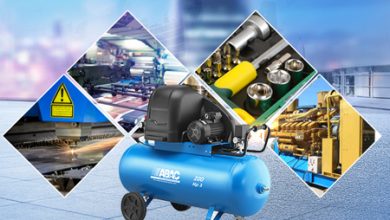
Compressed Air Is Part of the Pump System
SupaVac equipment operates on compressed air.
Available compressor capacity must therefore be confirmed before selecting or mobilising a pump.
The project should establish:
- available air pressure;
- free-air delivery;
- air-hose size;
- air-hose distance;
- other equipment using the same supply.
A correctly selected SupaVac unit supplied with inadequate compressed air will not perform as expected.
Hazardous-Area Requirements
Selected SupaVac models, including the SV60-V2, carry manufacturer-listed ATEX Zone 2 conformity.
This should never be interpreted as universal approval for every offshore classified area.
Final selection must consider:
- exact model;
- actual certification;
- area classification;
- operator requirements;
- project HSE procedures.
Can SupaVac Reduce Manual Sludge Handling?
In the manufacturer-documented FPSO case, SupaVac reports substantially lower personnel requirements compared with the operator’s previous manual method.
That does not mean SupaVac eliminates all tank entry, inspection, washing or confined-space requirements.
Its role is narrower and more defensible:
to mechanise the recovery and transfer of difficult sludge and solids where the application is suitable.
For offshore projects, that distinction matters.
What to Send Takmeel Global
For an FPSO or offshore tank-cleaning enquiry in Senegal, provide:
Asset type: FPSO / FSO / tanker / vessel
Tank/application:
Material:
Approximate solids content:
Maximum solids size:
Specific gravity:
Viscosity:
Temperature:
Horizontal suction distance:
Vertical suction lift:
Horizontal discharge distance:
Vertical discharge elevation:
Required transfer capacity:
Available compressed-air pressure:
Available compressor capacity:
Area classification:
Tank-access/manway dimensions:
SupaVac Support for Senegal from Takmeel Global
Takmeel Global supports industrial customers evaluating SupaVac equipment for difficult sludge, slurry and solids-transfer applications across the GCC and African markets.
For Senegal, the strongest SupaVac opportunity is not a generic “industrial pump” proposition.
It is specific applications such as FPSO tank sludge, offshore tank cleaning, bilge waste, slops and marine solids recovery.
If your project involves one of these duties, send the application information to Takmeel Global so the pump can be reviewed against the actual material, transfer geometry and compressed-air availability.
Takmeel Global General Trading LLC
Dubai, UAE
Mobile: +971 52 692 2575
Office: +971 4 256 4920
Email: info@takmeeltrading.com
Web: www.takmeeltrading.com