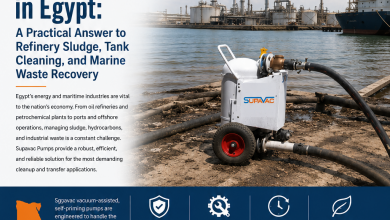
Supavac Pumps in Mauritania: A Practical Solution for Iron Ore Slurry, Port Sludge, and Offshore Waste Recovery

Mauritania is not the kind of market you approach with generic industrial copy. That would be a mistake. It is a country where the operating realities are very specific: heavy mining logistics, a strategic export port, offshore gas development, and a working environment where difficult material does not politely move itself from one place to another. Iron ore fines, dirty water, sludge, sediment, sump buildup, and residue all create the same question for operators: how do you clear the mess without turning the cleanup itself into another operational problem? Mauritania’s iron ore sector remains central to its economy, the country has kept investing in rail and export infrastructure linked to mining, and the Greater Tortue Ahmeyim offshore gas project began production in early 2025, adding a new layer of offshore maintenance and waste-handling needs.
That is where the conversation around Supavac pumps in Mauritania becomes serious. Not because the country sounds promising on a map, but because the work itself creates real, recurring transfer problems. In Mauritania, those problems show up in three clear places. First, around mining and ore movement, where fines, slurry, and dirty runoff collect in sumps, pits, and low points. Second, around ports and marine-linked operations, where sludge, sediment, and dirty residue build up in places that are awkward to clean. Third, around offshore gas and support operations, where waste recovery and residue removal need to be done efficiently and safely. SupaVac’s official applications align directly with mining slurries, mud and tailings transfer, sump and pit cleaning, hazardous waste recovery, oil and gas tank cleaning, slops sump cleaning, FPSO tank cleaning, bilge cleaning, and vessel-bottom cleaning.
That fit matters because too many industrial blogs make the same bad move: they try to sell “a pump” instead of solving an operating headache. Mauritania is a market where that approach falls flat. The people who would actually care about a system like this are not shopping for a pretty product description. They are trying to solve real-site issues. A mine superintendent wants the sump cleared properly. A maintenance team wants sludge gone without wasting half a shift. A port contractor wants dirty residue moved without turning cleanup into a bottleneck. An offshore support team wants a reliable way to recover difficult material without unnecessary complications. That is the real commercial angle here.
Why Mauritania Is a Better Market Than It First Appears
At first glance, some people underestimate Mauritania because it is smaller and less talked about than other African markets. That is lazy analysis. The better view is to look at the nature of its industries. Mauritania is still a major iron ore producer and exporter, and Reuters reported financing support in late 2025 for railway rehabilitation connected to the broader Lobito-style critical minerals logistics story in the region, underscoring how important transport and mineral export infrastructure remain. At the same time, Reuters reported in March 2025 that a gas leak was detected during commissioning at the BP-operated Greater Tortue Ahmeyim project offshore Senegal and Mauritania, after the project had already started producing gas earlier in the year. That does not mean the project is failing. It means something more useful for commercial thinking: offshore operations in Mauritania are now real, active, and maintenance-sensitive.
The overlap between mining and offshore energy is exactly what makes Mauritania interesting. A country with only one narrow industrial angle can still be worth targeting, but a country where mining residue, port sediment, marine waste, and offshore sludge-related work all exist at once offers broader opportunities for a solids-handling solution. That is especially true when the environment is harsh, access can be difficult, and downtime is expensive.
The Real Problems on the Ground
The first problem is ore-related slurry and dirty runoff.
Mining does not only produce saleable material. It also produces fines, wet residue, sediment-heavy runoff, and dirty accumulation in pits and sumps. The material is rarely consistent. One area may be watery and easy to move, another may be thick with settled solids, and another may be somewhere in between. That inconsistency is exactly what causes trouble when a site relies on equipment better suited to cleaner liquids.
The second problem is sump and pit cleaning.
This sounds routine because it is routine. That is exactly why it matters. Repetitive tasks are where hidden costs build up. If a sump has to be cleaned over and over again, then speed, reliability, and ease of use matter far more than a glossy brochure. SupaVac’s official mining applications specifically include sump and pit cleaning, transfer of mining slurries, thickener spill management, tailings and pond cleaning, and hazardous waste recovery. Those are not vague “possible uses.” They are direct application matches.
The third problem is port sludge and sediment-heavy cleanup.
Mauritania’s export and marine environment adds another layer. Ports are not clean places. Sediment, oily residue, dirty washdown, and accumulated sludge are part of the operating reality, particularly where bulk material handling and marine logistics intersect. Even when dredging is handled through larger infrastructure works, there is still a constant need for cleanup and transfer work around associated operations, low points, drains, storage zones, and support areas.
The fourth problem is offshore and marine waste recovery.
Once offshore gas projects move from idea to reality, maintenance becomes real too. Slops, sump residue, bilge-related waste, dirty tank bottoms, and contaminated cleanup material all need to be handled. SupaVac’s published oil and gas and marine applications include tank cleaning and desludging, slops sump cleaning, hazardous waste recovery, oil sludge and tank-bottom residue transfer, FPSO tank cleaning, bilge cleaning, vacuum cleaning of vessel bottoms, and barge/hull cleaning waste recovery. In Mauritania, that makes the product conversation much easier to justify.
Why Ordinary Pumping Setups Often Disappoint
This is where the wrong buying decision becomes expensive.
A standard pump may look fine when the material is relatively thin and predictable. But difficult industrial waste is rarely cooperative. Once solids content rises, or the material becomes sticky, gritty, or mixed, the whole job changes. Suction becomes less reliable. Hose blockages become more likely. Operators start stopping to clear interruptions. Jobs drag out. More people get pulled in. The cleanup takes longer than it should, and the equipment becomes part of the problem.
That is the trap many sites fall into. They do not realise they are trying to solve a solids-handling problem with equipment designed for a cleaner liquid-transfer problem. The result is almost always the same: slower cleanup, more frustration, and higher labour exposure.
In Mauritania, that issue matters even more because the environment is not forgiving. Heat, dust, remoteness, and the importance of keeping mining and export-linked operations moving all make inefficiency more painful. A slow cleanup job is not just an inconvenience. It can delay access, extend maintenance, and interfere with work that actually generates revenue.
Where Supavac Fits in Mauritania
The strongest fit is around mining slurry transfer and sump cleaning.
SupaVac’s official mining applications are a very close match for Mauritania’s ore-handling environment: sump and pit cleaning, mining slurry transfer, thickener spill management, tailings and pond cleaning, and hazardous waste recovery. That is the clearest place to start because it addresses a problem mining teams already understand.
The second strong fit is offshore and marine cleanup.
Mauritania’s offshore gas activity changes the discussion. Once gas production starts, the site-support, maintenance, and waste-recovery needs become practical rather than theoretical. SupaVac explicitly positions its systems for oil and gas tank cleaning, slops sump cleaning, oil sludge and tank-bottom residue transfer, and marine applications such as bilge cleaning and vessel-bottom cleaning. That is a strong operational fit for offshore support, marine contractors, and related maintenance work.
The third fit is port and terminal-side dirty cleanup.
This is not always glamorous work, but it is commercially useful work. Where sediment-heavy, sludge-heavy, or waste-heavy material has to be removed from awkward locations, the benefit of a solids-focused vacuum transfer system becomes clear very quickly.
Which Supavac Models Make the Most Sense?
For Mauritania, the discussion usually comes down to the nature of the job.
If the site needs a mobile and flexible solution for recurring cleanup, spot work, sumps, and sludge transfer, the SV110-V2 is worth attention. SupaVac describes it as 100% air powered and operated, capable of transferring heavy sludge with high solids content, recovering from up to 50 metres and delivering more than 500 metres, while remaining a one-man or fully automatic operation. Its official application list includes thickener de-sludge, sump and shaft cleaning, tailings and ash pond cleaning, hazardous waste recovery, drilling mud and cuttings transfer, and transfer of mining slurries. That makes it highly relevant where flexibility and speed matter.
If the job is heavier-duty, especially where the sludge is thicker, the transfer distances are longer, or the material is harder to move, the SV250V is the stronger conversation. SupaVac states that the SV250V is designed to transfer a wide array of heavy sludges, with vertical suction lift up to 30 metres, recovery of flowing slurries from up to 50 metres, and delivery up to 1000 metres. Its official applications include thickener de-sludge, petrochemical tank cleaning, heavy crude transfer, barge and hull cleaning, sump and shaft de-mucking, tailings and ash pond cleaning, hazardous waste recovery, and transfer of mining slurries. That is a serious feature set for tougher Mauritanian duties.
The key point is not to force one model into every site. The key point is that Mauritania has enough real sludge and solids-handling pain to justify a proper application-based conversation.
Why Buyers Would Actually Care
Because they are not buying a machine for entertainment.
They are buying a way to:
- clear mining slurry faster,
- spend less time on repetitive sump cleanup,
- reduce manual handling,
- improve dirty maintenance efficiency,
- and avoid turning waste recovery into an operational bottleneck.
The likely buyers are obvious:
- mining operations teams,
- mine maintenance managers,
- port contractors,
- offshore support companies,
- HSE leads,
- and procurement teams sourcing for dirty real-world jobs rather than ideal lab conditions.
That is why Supavac pumps in Mauritania have real commercial logic. The sales case is not built on hype. It is built on the cost of slow cleanup and the value of solving that problem properly.
Final Thought
Mauritania is a practical market for this kind of equipment because the country combines exactly the kinds of industries that create solids-heavy transfer problems: mining, ports, marine operations, and offshore gas. The mining sector keeps ore, fines, and slurry in the picture. Port and export activity keep sediment and dirty cleanup work relevant. Offshore gas adds slops, residue, and maintenance-related waste recovery to the mix. Mauritania does not need a made-up problem statement. It already has the right conditions for a sludge and slurry solution to make sense.
That is why the better way to position this is simple: Supavac pumps in Mauritania are not a generic product pitch. They are a practical answer for operators dealing with iron ore slurry, sump buildup, port sludge, marine residue, and offshore waste recovery in tough conditions.
FAQ
What are the strongest use cases for Supavac pumps in Mauritania?
The strongest use cases are mining slurry transfer, sump and pit cleaning, tailings and pond cleaning, port-side dirty cleanup, and offshore or marine waste recovery.
Why is Mauritania a good market for this kind of solution?
Because Mauritania combines active mining infrastructure with offshore gas production and marine-linked export operations, all of which create sludge, residue, and solids-heavy cleanup requirements.
Which Supavac models are most relevant here?
For mobile, recurring cleanup work, the SV110-V2 is a strong fit. For heavier sludge and more demanding transfer work, the SV250V is the stronger discussion.
Who would typically buy a solution like this in Mauritania?
Mining companies, port and marine contractors, offshore support providers, industrial maintenance teams, and procurement managers dealing with solids-heavy transfer problems.
Need a Practical Sludge and Solids Handling Solution?
If your operation in Mauritania is dealing with iron ore slurry, sump buildup, port sludge, marine residue, or offshore waste recovery, the right pumping system can make a serious difference in speed, safety, and maintenance efficiency. For technical discussions, product guidance, or application-based support on Supavac pumps in Mauritania, contact Takmeel Global General Trading LLC.
Takmeel Global General Trading LLC
Office #315, Makatib Building
PO Box 85250, Port Saeed
Deira, Dubai, UAE
Phone: +971 52 692 2575 | +971 04 256 4920
Email: info@takmeeltrading.com