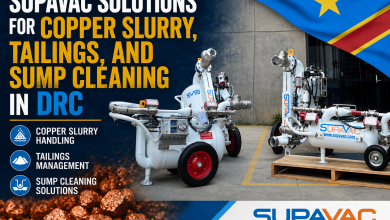
Supavac Pumps in Tanzania: A Practical Solution for Mining Slurry, Tailings, and Sump Cleaning

Tanzania is not a soft industrial market. It is a country where mining growth, processing activity, and infrastructure expansion keep creating one recurring operational problem: difficult material has to be moved, and standard pumping methods often struggle when that material stops behaving like water. Tanzania has continued pushing major resource and energy projects, including the revival of large-scale graphite development and continued negotiations around a multi-billion-dollar LNG project, while older mining-related environmental problems have already shown what happens when waste and contaminated water are not controlled properly. Reuters has reported both the scale of the Nachu graphite development and the Tanzanian government’s past action over wastewater pollution at the North Mara mine, which tells you something important: slurry, tailings, and waste handling are not side issues in Tanzania. They are operational and regulatory issues.
That is why the case for Supavac pumps in Tanzania is commercially real. This is not about dropping a product name into an African country and hoping the market responds. That approach is weak. The better question is whether the operating environment creates real demand for a solids-handling solution. In Tanzania, the answer is yes. Gold operations, graphite projects, tailings ponds, thickener spill zones, mine sumps, runoff pits, and difficult cleanup jobs create exactly the kind of operating pressure that makes a sludge- and solids-focused vacuum transfer system worth discussing.
The deeper problem is simple. Most maintenance and cleanup delays happen because the material being handled is inconsistent. A mine sump does not contain neat, uniform liquid. A tailings pond edge does not behave like a clean-water application. Thickener residue can change from pumpable slurry to semi-solid mass depending on solids concentration, time, and settling. Once abrasive fines, muddy residue, mineral solids, and dirty water mix, the job shifts from normal pumping to difficult transfer. That is where many sites lose time.
Why Tanzania Has a Strong Slurry and Tailings Handling Need
Tanzania’s mining profile makes this obvious. The country remains important for gold and increasingly relevant for battery-related minerals and large-scale mining investment. Reuters reported that Magnis Energy’s Nachu graphite project in Tanzania was expected to produce 236,000 tonnes a year, which is not a small side project but the kind of development that creates serious process-water, fines, and residue-handling challenges. Reuters also reported that Tanzanian authorities ordered a cleanup at North Mara over wastewater pollution risks, underlining that contaminated water and mining waste are not just operational annoyances; they can become regulatory flashpoints.
Tanzania also has a broader industrial and logistics backdrop that strengthens the case. Reuters has reported that Tanzania hopes to conclude talks around its LNG project and that energy and pipeline work continue in the country. That matters because large energy and infrastructure projects create trench water, sediment, sump cleaning, and sludge-transfer requirements of their own, even when the core focus remains mining. This does not mean every project needs the same pump. It means the country keeps generating solids-heavy maintenance jobs.
The result is a very simple commercial reality: the people running plants, pits, ponds, and maintenance teams do not just need “a pump.” They need a way to move heavy slurry, settled solids, tailings residue, and dirty water from places that are awkward, time-sensitive, and often remote.
The Real Problems on Tanzanian Sites
The first problem is tailings residue and pond-edge cleanup. Tailings systems are never static. Solids settle. Residue thickens. Wet edges become difficult to manage. Overflow and contamination risks increase if cleanup is delayed. Once material settles and turns dense, ordinary pumping setups start struggling.
The second problem is mine sump and pit cleaning. This sounds basic, but it is one of the most repeated pain points in mining. Water mixed with fines, sand, mud, and process residue builds up in sumps and pits. If it is not removed efficiently, access worsens, maintenance slows, and equipment areas become harder to manage.
The third problem is thickener spill and desludging work. Thickener zones are exactly where many plants waste time because the material is not easy to move once it settles or thickens. Manual cleanup is slow. Dilution is messy. Standard pumps often become unreliable when the solids load rises.
The fourth problem is remote-site maintenance. Tanzania’s mining work is not always happening in a clean, easy-to-service plant environment. Remote conditions increase the cost of clogging, mechanical failure, and repeated maintenance intervention. The more often a transfer system needs stopping, clearing, or adjusting, the worse the overall economics become.
The fifth problem is environmental pressure. This is where weak equipment choices become expensive. When residue, pond buildup, or contaminated slurry is not managed properly, the consequence is not just slower cleaning. It can become a compliance issue. Tanzania has already shown that environmental handling problems can attract government intervention.
Why Standard Pumping Logic Often Fails
This is where companies usually fool themselves.
They assume that if the motor is big enough, the problem is solved. It is not. Thick slurry, settled tailings, dense residue, and mineral-laden dirty water do not behave like ordinary liquid transfer. Once the solids concentration rises, standard pumping systems begin fighting the material instead of moving it efficiently. Suction becomes less reliable. Wear increases. Blockages happen more often. Operators start improvising with dilution, repeated cleanouts, manual intervention, or smaller repeated batches. All of that wastes time.
And that wasted time matters. In mining, slow cleanup is not harmless. It affects access, maintenance scheduling, manpower use, and sometimes production continuity. The hidden cost is not only the pump itself. It is everything that waits behind the cleanup job.
That is why Supavac pumps in Tanzania should be discussed as a solids-handling answer, not as a generic fluid-transfer product.
Where Supavac Fits Best in Tanzania
The strongest fit is in tailings and slurry transfer support. When material is abrasive, solids-laden, and inconsistent, the discussion should shift away from ordinary liquid pumps and toward systems meant for sludge and solids transfer.
The second strong fit is sump and pit cleaning. This is one of the clearest use cases because the material is usually messy, repetitive, and time-sensitive. Sites need a system that can handle dirty water, fines, sludge, and settled material without turning every cleanup job into a maintenance event.
The third fit is thickener and residue cleanup. This is where a system built around suction and solids movement becomes much more relevant than a conventional setup that prefers predictable liquid.
The fourth fit is pond and containment area cleanup, especially where residue buildup needs to be removed before it becomes an environmental or operating issue.
The fifth fit is maintenance work in remote or temporary operating conditions, where a mobile, practical sludge-handling system has more value than equipment that looks fine on paper but struggles under dirty real-world conditions.
Best-Fit Supavac Discussion for Tanzania
For Tanzania, the product conversation should be practical, not theatrical.
For mobility-focused sump cleaning and spot cleanup, the discussion would usually start with a more compact mobile Supavac option. That makes sense where a site needs manoeuvrability and repeat-use cleanup across different points.
For heavier sludge, tailings residue, and more serious plant-side transfer work, the discussion naturally moves toward larger Supavac units better suited for dense slurry and heavier solids handling.
For harder-duty plant cleanup or thicker residue problems, a heavier solids-focused unit belongs in the conversation earlier, not later.
The commercial point is this: the right Supavac choice depends on the job, but the Tanzania market clearly has enough real slurry and residue pain points to justify that conversation.
Why This Has Sales Value
The opportunity here is not “selling pumps into Tanzania.” That is lazy language.
The real opportunity is selling a solution to:
- slow tailings cleanup,
- time-consuming sump maintenance,
- thickener residue buildup,
- remote-site sludge handling,
- and inefficient slurry transfer.
The likely buyers are obvious:
- mine operations managers,
- plant maintenance heads,
- processing teams,
- HSE managers,
- contractors handling dewatering and cleanup,
- and procurement teams responsible for practical equipment, not theory.
These people will not buy a product that sounds advanced. They buy when it solves an expensive recurring problem.
That is exactly why Supavac pumps in Tanzania have a commercially credible angle. The problem exists. The cost of doing nothing exists. The cost of using the wrong equipment exists. That is a real sales foundation.
Final Thought
Tanzania’s mining and industrial direction makes solids and sludge handling more important, not less. Graphite growth, gold operations, wastewater sensitivity, and broader infrastructure activity all point in the same direction: more slurry, more residue, more sumps, and more cleanup pressure. Reuters reporting on Nachu, the LNG negotiations, and mining wastewater enforcement all support the same conclusion: difficult material handling is part of the real operating environment.
That is why the conversation around Supavac pumps in Tanzania is worth having. It is not a branding exercise. It is a problem-solution discussion grounded in the realities of mining slurry, tailings cleanup, thickener residue, and sump maintenance.
FAQ
What are the best applications for Supavac pumps in Tanzania?
The strongest applications are mining slurry transfer support, tailings cleanup, sump cleaning, pit cleaning, thickener residue removal, and other solids-heavy maintenance jobs.
Why are standard pumps often weak in mining slurry jobs?
Because mining slurry and residue are inconsistent, abrasive, and solids-heavy. Many ordinary pumps perform well on cleaner liquids but struggle when the solids load rises.
Who would typically buy a solution like this in Tanzania?
Mine operators, plant maintenance teams, contractors, HSE teams, and procurement managers dealing with recurring cleanup or residue-transfer problems.
Is the opportunity in Tanzania only about gold mining?
No. Gold is important, but graphite, energy, and infrastructure-linked industrial work also create sludge, sediment, and solids-handling problems.
Need a Practical Slurry and Solids Handling Solution?
If your operation in Tanzania is dealing with mining slurry, tailings buildup, sump cleaning, thickener residue, or other solids-heavy transfer problems, the right pumping system can make a big difference in speed, safety, and maintenance efficiency. For technical discussions, product guidance, or application-based support on Supavac pumps in Tanzania, contact Takmeel Global General Trading LLC.
Takmeel Global General Trading LLC
Office #315, Makatib Building
PO Box 85250, Port Saeed
Deira, Dubai, UAE
Phone: +971 52 692 2575 | +971 04 256 4920
Email: info@takmeeltrading.com