Supavac Pumps in Nigeria: A Practical Solution for Sludge Transfer, Tank Cleaning, and Hazardous Solids Handling

Nigeria is not a theoretical market for solids-handling equipment. It is a real operating environment where sludge, tank bottoms, oily waste, drill cuttings, sump residue, and other difficult materials have to be moved safely and efficiently. The country’s oil production has recently risen to about 1.8 million barrels per day, while the Dangote refinery is operating at 650,000 barrels per day and expanding its wider petrochemical footprint. On top of that, Nigeria has also begun exporting a new crude grade, showing that upstream and downstream activity are both moving. More activity means more waste streams, more residue, more maintenance shutdowns, and more transfer problems that cannot be handled with the wrong type of pump.
That is exactly why Supavac pumps in Nigeria are worth serious attention. This is not about selling a pump because “Africa is growing.” That kind of lazy marketing is useless. This is about matching a real operational problem in Nigeria with a pump technology that is built for sludge, slurries, oil-contaminated solids, hazardous environments, and difficult transfer jobs. Supavac’s official application material specifically covers drill cuttings, slurries, mud, slimes, heavy sludges, hazardous waste recovery, spill management, tank cleaning, oil sludge and tank-bottom residue transfer, FPSO tank cleaning, and bilge cleaning. That is not a stretch. That is direct application fit.
Why Nigeria Has a Real Need for Better Sludge and Solids Transfer
When a country’s oil output is rising, refineries are expanding, and export infrastructure is active, operations do not just produce fuels and revenue. They also produce transfer problems. Tank bottoms accumulate. Sludge builds up. Pits and drains collect solids. Spill response work becomes urgent. Maintenance teams have to move sticky, abrasive, semi-solid, and contaminated material without turning a manageable job into a shutdown. In Nigeria, where upstream, midstream, and downstream operations all matter, these problems are not occasional. They are operational realities.
Nigeria also has a history of oil spill incidents and pipeline-related contamination events. In 2025, for example, Reuters reported a crude spill from the Trans Niger Pipeline after a burst. Even when one specific incident is addressed, the broader point remains: spill recovery, sludge handling, and contaminated solids transfer are not abstract needs in Nigeria’s oil environment. They are part of field reality, and they demand equipment that can recover difficult material fast and safely.
This is where many operators make a costly mistake. They assume any pump can do the job if the motor is powerful enough. That is wrong. Thick sludge, oily solids, drill cuttings, mud, tank residue, and solids-laden waste do not behave like clean water. They clog weak systems, wear out unsuitable equipment, slow maintenance work, and create additional labour and safety burdens. In other words, the wrong pump does not just fail to solve the problem. It creates a second problem.
The Real Operational Problems Nigerian Sites Face
The first major issue is sludge consistency. Material in storage tanks, pits, separators, drains, and waste holding areas is rarely uniform. One section may be liquid-heavy, another may be thick and sticky, and another may contain coarse solids. That is exactly the kind of mixed, unpredictable material that standard transfer setups struggle with. Supavac’s official literature is clear that its solids vacuum pumps are intended for solids-laden materials including slurries, mud, slimes, and heavy sludges. That matters because the product fit is based on actual material conditions, not marketing fantasy.
The second issue is hazardous operating areas. In parts of Nigeria’s oil and industrial sector, pumping equipment is not being deployed in clean, open, low-risk conditions. You may be dealing with hydrocarbon-contaminated areas, confined workspaces, tank-cleaning zones, or plant locations where electrical risk matters. Supavac states that its pneumatic displacement pumps use no electricity and are considered intrinsically safe for use in many plant and hazardous locations, with CE and ATEX investment also referenced in its published material. For hazardous transfer work, that is not a minor feature. It is a buying reason.
The third issue is maintenance downtime. Whether the work is being carried out at a refinery, terminal, marine facility, or industrial plant, cleaning out sludge and residues is rarely a value-added activity on its own. It is necessary work that delays something else. If transfer takes too long, operations wait. If equipment clogs, labour increases. If manual handling becomes the fallback, safety exposure rises. That is why speed, reach, reliability, and ease of deployment matter so much more than brochure claims about generic capacity.
The fourth issue is access and reach. Transfer points are not always close to where the material has to go. Supavac’s own tank-cleaning application page states that the SV250V can recover flowing slurries from up to 50 metres and deliver them up to 1000 metres while remaining a one-person or fully automatic operation. For maintenance teams dealing with awkward tank locations, remote pits, or difficult access points, that kind of reach is commercially relevant.
Why Conventional Pumping Approaches Often Fail
Many transfer jobs in Nigeria are not “water pumping” jobs. They are solids-handling jobs disguised as pumping jobs. That distinction matters.
A conventional pump may handle liquid well, but once the material becomes heavy, viscous, abrasive, or solids-laden, the failure points start appearing quickly. Suction becomes inconsistent. Wear rates rise. Hose blockages become common. Operators spend too much time clearing interruptions instead of finishing the job. In maintenance environments, this does not just waste time. It increases total job cost.
The wrong setup also pushes people toward workarounds that are operationally ugly: manual cleanouts, extra handling steps, partial removal, diluted transfer, or repeated stoppages. None of that is efficient. None of it is safe. And none of it makes sense if the site is repeatedly handling the same type of material.
This is why the problem in Nigeria is not simply “needing a pump.” The problem is needing a transfer system that can deal with the nasty material that builds up around real oil and industrial operations.
Where Supavac Pumps in Nigeria Fit Best
The case for Supavac pumps in Nigeria is strongest when the job involves one or more of the following:
1. Oil sludge and tank-bottom residue transfer
Supavac’s official application material directly lists oil sludge and tank-bottom residue transfer, tank cleaning, and desludging. In Nigeria, where upstream activity is recovering and downstream capacity around Dangote is significant, this is one of the clearest use cases. Tanks do not clean themselves, and residue does not disappear because production is rising.
2. Hazardous waste recovery and spill response
Supavac lists hazardous waste recovery/transfer and spill management among its applications. Given Nigeria’s history of spill events and hydrocarbon handling across multiple parts of the value chain, this is not just relevant; it is practical. When contaminated material needs to be recovered, the priority is not elegance. It is controlled, efficient removal.
3. Marine and vessel-related cleanup
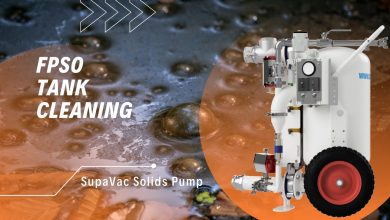
Supavac also lists bilge cleaning, barge and vessel-bottom cleaning, hull-cleaning waste recovery, and FPSO tank cleaning / desludging. Nigeria’s marine-linked oil logistics make that a meaningful angle for the country, especially where oily sludge, residues, or waste recovery are part of vessel or offshore support work.
4. Sumps, pits, and drains with solids-heavy waste
Supavac’s applications include sump, pit, and drain cleaning as well as transfer of slurries and sludges. That makes the technology relevant beyond purely oil-branded work. Industrial facilities, waste operations, and heavy process environments in Nigeria can face the same class of messy transfer problem even when the material is not directly tied to crude production.
Which Supavac-Type Solution Makes the Most Sense?
This is where commercial thinking matters.
If the job is focused on heavy sludge transfer, tank cleaning, and difficult residues, the SV250V deserves attention because Supavac describes it as designed to transfer a wide range of heavy sludges and notes vertical suction lift up to 30 metres. That is a strong fit for demanding sludge jobs where the material is more than just wet waste.
If the operating condition is especially harsh and the material is dense, Supavac’s SV280V is also relevant because the company describes it as a heavy-duty solids pump capable of capturing high-density slurries using strong vacuum and high-velocity airflows. That makes it a more serious conversation for tougher solids-handling scenarios rather than light maintenance work.
If the site needs mobility for sludge recovery and transfer, Supavac’s SV110-V2 is relevant because the company states it can recover from up to 50 metres and deliver more than 500 metres in a one-man or fully automatic operation. For Nigerian operators who need a more deployable setup rather than a larger fixed-duty option, that matters.
The important point is this: not every Nigerian site needs the biggest pump. But many sites do need a pump technology that is actually designed for solids-laden, awkward, hazardous transfer work instead of pretending that clean-liquid logic applies to sludge.
Why This Matters Commercially in Nigeria
The opportunity is simple.
If you are marketing Supavac pumps in Nigeria, you are not selling “a pump.” You are selling:
- faster sludge removal,
- less manual handling,
- better suitability for hazardous locations,
- cleaner tank and sump maintenance,
- and lower operational pain during messy transfer jobs.
That is commercially strong because buyers in Nigeria’s oil and industrial sectors do not buy capital equipment just because it sounds advanced. They buy when the product solves an expensive operational headache.
The real buyers are obvious:
- operations managers trying to reduce downtime,
- maintenance heads dealing with recurring cleanup jobs,
- HSE teams concerned about hazardous handling,
- procurement teams looking for equipment that actually fits the application,
- and contractors who need a reliable way to recover and transfer difficult material.
That is why the message has to stay grounded. Don’t oversell. Don’t pretend every facility needs a full overhaul. Just state the truth: where sludge, residues, oily solids, contaminated waste, pits, drains, or tank-bottom material have to be moved efficiently, Supavac pumps in Nigeria deserve serious consideration.
Final Thought
Nigeria’s oil and industrial landscape is active, messy, and operationally demanding. Rising production, new crude export activity, refinery throughput, and petrochemical expansion all point in one direction: more movement of difficult materials, not less. And when the material is sludge, oily residue, solids-laden waste, drill cuttings, or hazardous contaminated buildup, a generic pumping approach is usually the wrong answer.
That is where Supavac stands out. Its published applications align directly with the kind of work Nigerian operators actually face: sludge transfer, tank cleaning, hazardous waste recovery, spill response, sump cleaning, and solids-heavy transfer tasks. That is not vague relevance. That is direct operational fit.
If the goal is to reduce downtime, improve transfer efficiency, and handle difficult material more safely, then the conversation around Supavac pumps in Nigeria is not a branding exercise. It is a practical engineering and maintenance conversation — exactly where it should be.
Need a Practical Sludge and Solids Handling Solution?
If your operation in Nigeria is dealing with tank-bottom residue, oily sludge, contaminated waste, sump buildup, or other solids-heavy transfer challenges, the right pumping system can make a serious difference in safety, speed, and maintenance efficiency. For technical discussions, product guidance, or application-based support on Supavac pumps in Nigeria, contact Takmeel Global General Trading LLC.
Takmeel Global General Trading LLC
Office #315, Makatib Building
PO Box 85250, Port Saeed
Deira, Dubai, UAE
Phone: +971 52 692 2575 | +971 04 256 4920
Email: info@takmeeltrading.com