Post-Intersec Procurement Action Plan: Turning Safety Priorities into Purchase Decisions

Intersec may be over, but for procurement teams, HSE managers, and operations leaders across the UAE, the real work starts after the exhibition. The value of attending Intersec is not measured by brochures collected or conversations held—it is measured by what actions follow.
Every year, Intersec highlights the same reality: most safety incidents are preventable, and most prevention depends on correct procurement decisions. Slip hazards, dropped objects, inadequate PPE, poor lighting, unsafe chemical storage, and insufficient emergency response equipment are not abstract risks—they are daily operational exposures.
This post-Intersec procurement action plan is designed to help organizations move decisively from safety awareness to safety implementation, ensuring that insights gained during Intersec translate into tangible improvements across worksites.
Why Post-Intersec Action Matters More Than the Event Itself
Exhibitions create momentum, but momentum fades without execution. Many organizations attend Intersec, recognize gaps in their safety infrastructure, and then delay action until the next incident occurs. This delay is costly—financially, operationally, and reputationally.
Post-Intersec procurement planning ensures that:
- Identified risks are addressed while awareness is high
- Budgets are allocated with clarity
- Safety upgrades are prioritized logically
- Temporary controls are replaced with permanent solutions
From a procurement perspective, this is the ideal time to standardize safety requirements, consolidate suppliers, and issue clear RFQs aligned with current risk profiles.
Step 1: Review Safety Gaps Identified During Intersec
The first step after Intersec should be an internal review. Procurement teams should collaborate with HSE and operations to document:
- Areas where safety incidents or near-misses have occurred
- Temporary or improvised safety measures currently in use
- Aging or non-compliant safety equipment
- High-traffic zones with slip, trip, or fall risks
- Elevated work areas with dropped-object exposure
- Chemical storage areas lacking fire-resistant containment
- Emergency response equipment availability
This review forms the foundation for informed procurement decisions rather than reactive purchasing.
Step 2: Categorize Safety Requirements by Risk Type
To avoid fragmented procurement, safety needs should be grouped into categories. Based on Intersec discussions and common industrial risks in the UAE, these typically include:
Surface and Access Safety
- Anti-slip walkways and stair treads
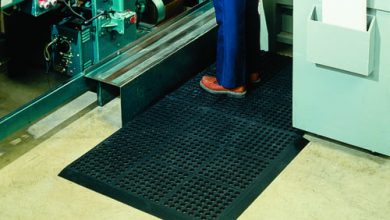
- Anti-slip PU rig floor mats for heavy-duty areas
Personal Protective Equipment (PPE)
- Flame-resistant and IFR coveralls (summer and winter)
- Safety helmets
- Safety glasses
- Impact protection gloves
- Safety footwear
Falling Object Prevention
- Safety nets for elevated work areas
Visibility and Illumination
- Tower lights for outdoor, temporary, or low-light operations
Hazardous Material Storage
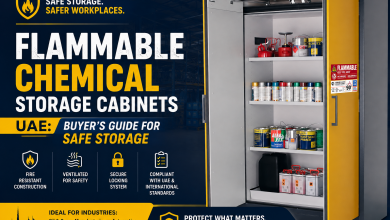
- Fireproof safety cabinets for flammable, toxic, and hazardous substances
Emergency Response Equipment
- Safety showers
- Eyewash stations
Categorization allows procurement teams to prioritize purchases based on exposure severity rather than convenience.
Step 3: Replace Temporary Controls with Permanent Safety Solutions
One of the clearest messages from Intersec was the risk associated with temporary safety measures. Warning signs, cones, tapes, and makeshift barriers provide visual cues but do not eliminate hazards.
Post-Intersec procurement should focus on:
- Permanent anti-slip systems instead of temporary mats
- Engineered safety nets instead of restricted access zones
- Certified PPE instead of generic alternatives
- Fireproof storage cabinets instead of standard cupboards
Permanent solutions reduce reliance on human behavior and provide consistent risk mitigation.
Step 4: Standardize Safety Specifications Across Sites
Organizations operating multiple facilities often face inconsistency in safety equipment specifications. Intersec highlighted the importance of standardization to improve compliance and simplify procurement.
Procurement teams should work towards:
- Standard PPE specifications by role and environment
- Approved anti-slip systems for walkways and platforms
- Defined safety cabinet types for chemical storage
- Standard lighting solutions for temporary and emergency use
- Uniform emergency response equipment placement
Standardization improves safety outcomes and reduces long-term procurement complexity.
Step 5: Prepare Clear RFQs Aligned with Safety Objectives
One of the most common procurement challenges is vague or incomplete RFQs. After Intersec, RFQs should be risk-driven, not price-driven.
A well-prepared RFQ should include:
- Clear description of the safety risk being addressed
- Application environment (industrial, marine, laboratory, outdoor)
- Quantity and site distribution
- Compliance expectations
- Durability and usage frequency
- Delivery timelines
Clear RFQs reduce delays, minimize misquotations, and ensure suppliers propose appropriate solutions.
Step 6: Consolidate Safety Procurement Where Possible
Fragmented procurement—buying PPE from one supplier, anti-slip products from another, and safety cabinets from a third—often leads to:
- Inconsistent specifications
- Increased administrative workload
- Higher long-term costs
Post-Intersec planning should consider consolidated safety procurement, where multiple safety categories are sourced through a single aligned supplier. This approach improves coordination, reduces lead times, and simplifies supplier management.
Step 7: Prioritize High-Risk Areas First
Not all safety upgrades need to happen simultaneously. Procurement teams should prioritize based on:
- Severity of potential incidents
- Frequency of exposure
- Regulatory or client expectations
- Operational criticality
For example:
- Slips and falls in high-traffic areas
- Dropped-object risks in elevated zones
- Chemical exposure risks in labs and maintenance areas
This prioritization ensures budgets are used where they have the greatest impact.
Step 8: Align Safety Procurement with Operational Timelines
Safety upgrades are most effective when aligned with:
- Planned shutdowns
- Maintenance windows
- Project mobilization phases
Post-Intersec procurement planning should account for operational schedules to ensure safety equipment is deployed without disrupting productivity.
Step 9: Engage with Safety Suppliers for Clarification and Availability
After Intersec, many procurement teams delay engagement until internal approvals are complete. A more effective approach is early supplier engagement to:
- Clarify specifications
- Confirm availability
- Understand lead times
- Align delivery with site schedules
Early engagement reduces last-minute sourcing challenges and supports smoother implementation.
Step 10: Convert Intersec Momentum into Measurable Outcomes
The true value of Intersec lies in measurable improvements:
- Reduced incident rates
- Improved compliance
- Safer work environments
- Lower operational disruptions
Procurement teams play a central role in achieving these outcomes by ensuring safety requirements are translated into timely, accurate purchase decisions.
Why Post-Intersec Procurement Timing Is Critical
Immediately after Intersec:
- Safety awareness is high
- Internal discussions are active
- Budget justifications are easier
- Management support is stronger
Delaying action risks losing momentum and reverting to reactive purchasing after incidents occur.
Procurement CTA
For organizations ready to convert post-Intersec safety priorities into procurement action, engaging with a supplier capable of supporting multi-category safety requirements—from anti-slip systems and PPE to safety nets, cabinets, lighting, and emergency response equipment—simplifies purchasing and accelerates implementation.
Takmeel Global General Trading LLC
Office #315, Makatib Building
PO Box 85250, Port Saeed, Deira, Dubai, UAE
📞 +971 52 692 2575
📞 +971 04 256 4920
📩 info@takmeeltrading.com